
The Psychology and Strategy of Short-Deck Poker (Six Plus Hold’em) for Hold’em Players Transitioning
So, you’re a solid Texas Hold’em player. You know your ranges, you can sniff out a bluff, and you’ve got a decent handle on pot odds. Then you sit down at a Short-Deck table—also called Six Plus Hold’em—and suddenly, your aces get cracked by a flush, your middle pair feels like the nuts, and the aggression is… relentless.
It’s a familiar shock. This isn’t just Hold’em with a few cards missing. It’s a different beast entirely, with a wilder heart and a faster pulse. Transitioning successfully isn’t just about memorizing new hand rankings; it’s a complete mental and strategic shift. Let’s dive into that shift.
Why Your Hold’em Brain Will Betray You
The core challenge is psychological. Your instincts are calibrated for a 52-card deck. In Six Plus, where all cards below a six are removed, the deck shrinks to 36 cards. That simple change warps reality. Hand values inflate. The probability of hitting big hands skyrockets. If Hold’em is a strategic marathon, Short-Deck is a sprinter’s duel—with more twists and turns.
You have to unlearn the fear of draws. In Texas Hold’em, a flush draw on the flop has about a 35% chance by the river. In Short-Deck? It jumps to roughly 45%. Straight draws become even more common. So playing passively because “a draw is just a draw” is a surefire way to bleed chips. The entire game leans towards action, and your mindset must lean with it.
The Hand Ranking Shuffle: The First Mental Hurdle
This trips everyone up at first. In Six Plus Hold’em, a flush beats a full house. Why? Because with fewer cards per suit, flushes are harder to make than full houses. It’s counterintuitive, but it makes sense once you think about the card removal. You have to burn this new hierarchy into your brain:
| Hand Rank (Six Plus) | Why It Feels Weird |
| 1. Royal Flush | The king stays the king. |
| 2. Straight Flush | Still monstrous. |
| 3. Four of a Kind | Moves up a spot. |
| 4. Flush | Now beats a Full House! |
| 5. Full House | Demoted, but still very strong. |
| 6. Straight | Easier to make, but vulnerable. |
| 7. Three of a Kind | A powerhouse on the flop. |
| 8. Two Pair | Often just a bluff-catcher. |
Strategic Pivots: From Tight to Fight
Okay, so the game is looser and more aggressive. How do you adjust your strategy? You can’t just wait for premium hands—you’ll get blinded out. The key is to embrace controlled aggression and re-evaluate what “premium” even means.
Pre-Flop: Play More, Play Positional
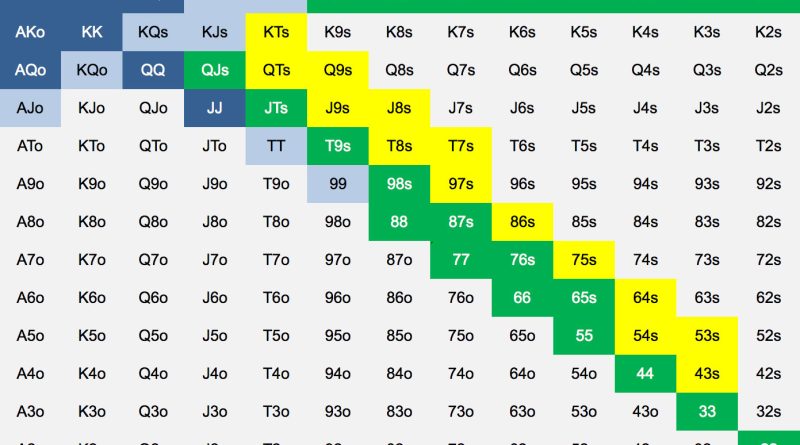
Starting hand selection widens significantly. Big pairs (A-A, K-K, Q-Q) are, of course, golden. But hands with high-card strength and straight/flush potential gain immense value. Think hands like J-10 suited, 9-8 suited, even K-Q offsuit. They simply connect with the board more often.
Position becomes even more critical—if that’s possible. With more players likely to have playable hands, acting last gives you a massive informational advantage. Don’t be afraid to open-raise a wider range from late position and apply pressure.
Post-Flop: The Art of the Barrel
This is where the game truly diverges. C-betting (continuation betting) becomes less about “I have a strong hand” and more about “I have a range advantage and you might be weak.” Because draws are so frequent, you often have equity even when you miss. That means you can—and should—fire multiple barrels more frequently.
But here’s the rub: your opponents know this too. So the leveling wars begin quickly. It’s not just about having a hand; it’s about representing the countless hands you could have. Bluffing with a gutshot or a backdoor flush draw is far more credible here than in Hold’em.
The Psychological Edge: Reading the New Tells
The faster pace and higher variance create unique psychological pressure points. You can use them.
First, watch for frustration tilt. Even experienced players get visibly annoyed when their “mathematically correct” call with a draw loses—which it will, often. That frustration leads to overplaying weak made hands or chasing recklessly.
Second, identify the “Hold’em Nits.” These players are still stuck in a tight, cautious mindset. They’ll fold to aggression on scary boards (any coordinated board is scary here). You can run them over with well-timed bets.
Third, manage your own tilt. The swings are brutal. You will lose with a full house to a flush. A lot. Accepting this as part of the game’s fabric, not a bad beat, is crucial. Your emotional stamina is a strategic asset.
Key Adjustments to Cement in Your Game
Let’s boil it down to a few actionable, mental notes:
- Value Bet Thinner, and More Often. Top pair is frequently worth three streets of value. In Hold’em, that’s often suicide. In Short-Deck, it’s standard.
- Respect the Draw, But Don’t Fear It. Charge draws heavily. Make them pay maximum to chase. If you’re the one drawing, well, you often have the right odds to call—which brings us to…
- Pot Odds Are Your Compass. With so many equities running close, the math becomes your anchor. Get comfortable calculating odds quickly because those close decisions define long-term profit.
- Three-of-a-Kind is a Monster on the Flop. Seriously. In Hold’em, you’re worried about draws. Here, you’re often ahead and should build the pot fast.
Honestly, the transition feels awkward at first. You’ll feel like you’re playing wrong, being too loose, too aggressive. That’s normal. The game is looser and more aggressive. The trick is to channel that chaos with purpose, not just add to it.
Embracing the Chaos
In the end, moving from Texas Hold’em to Short-Deck is like switching from chess to speed chess—with a deck of cards that loves drama. The fundamental skills of reading opponents, managing bankroll, and keeping a cool head? Those transfer perfectly. It’s the application that shifts.
You have to loosen up, both in strategy and in spirit. Embrace the variance. Lean into the aggression. Recalibrate your sense of what a “strong” hand is. It’s a thrilling, sometimes frustrating, but deeply rewarding evolution of the game you already love. The table feels different because it is different. And that, you know, is where the opportunity hides.